Recording
Session Work and Remote Recording
Session Musician
As you'll see from my collaborations and discography, I've done a lot of sessions and these days, I probably record more than I perform.
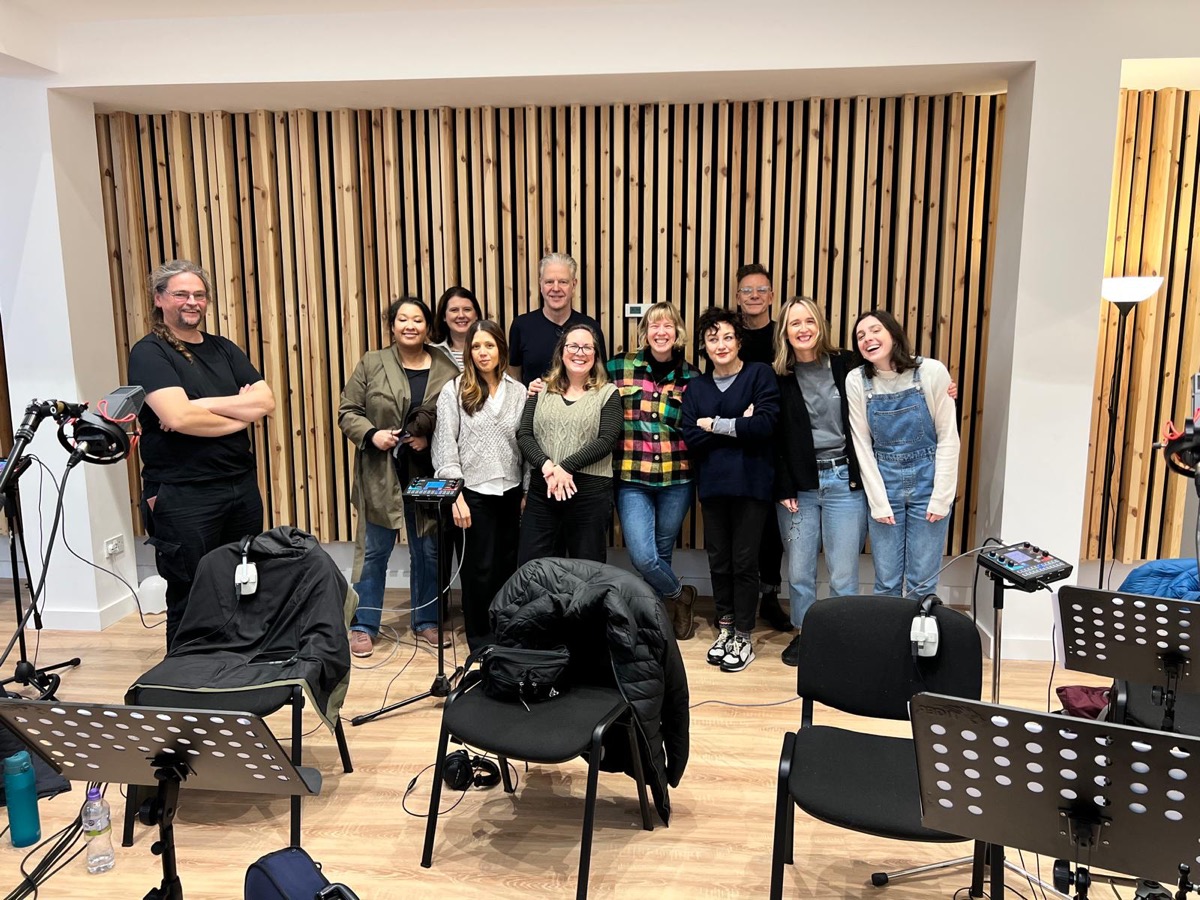
I'm a regular at Scotland's top studios and thanks to my longstanding affiliation with arranger extraordinaire, Seonaid Aitken, the range of work is broad: often it'll be jazz or soul with the likes of Corto Alto, Georgia Cecile or kitti; perhaps a little pop for the likes of Deacon Blue or Dot Allison, but more often than not it's somewhere on the traditional/folk spectrum. Thanks to my other string fixing buddy, Alice Allen, I've done a bit more playing for film and TV of late, for the likes of Hannah Peel, Scott Twynholm and Kim Carnie.
Who I've Recorded For
Remote Recording
On the other hand, in my home studio, I record and mix with an Apollo Twin audio interface combined with UAD-2 Satelite Octo, M4 Macbook Pro and the UAD Ultimate plugins package.
And then there's the layering up the many me's thing! Sometimes, this is ideal because obviously I can articulate consistently and achieve a very tight sound that packs a punch in an arrangement. When strings are not a main feature, recording myself at home is the ideal option in my book and even better if you can write your own parts, price-wise that is. The WAVs are delivered all edited and that way I also have quality control. If I'm writing the arrangements, it takes much longer as is most likely a collaborative process. There's also the question of notation. If I write and record at home, then the parts aren't needing notated particularly, which can be a huge percentage of the total time spent because communicating the bowing and articulation is so crucial.
That all said, there's nothing better than a quartet (or more) of players that know each other well and can play together intuitively, with soul and character. It's one of the things I love to do most and when it's good, it's really great. It can also be bad however when players are selected as individuals (no matter how great) because you need to have that trust, experience and rapport in the heightened recording environment.
I hope this helps when trying to figure out how to approach strings in your project but feel free to get in touch if you aren't sure which direction to go in.